PART 11 of 52 ONESHOTS in 52 WEEKS
小畑健×大場つぐみの『DEATH NOTE短編集』 “Death Note Tanpenshuu” by OBATA Takeshi & OHBA Tsugumi
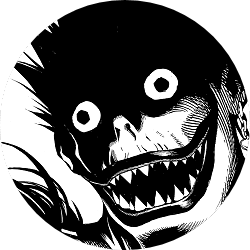
It’s almost bizarre to think it, since the series has always seemed one of the modern ‘greats’ that is never short on conversation wherever you consume your anime or manga, but Death Note is almost twenty years old. The famous cat-and-mouse thriller, which began in December 2003, has spawned only two substantial oneshots since its conclusion in 2006.
Published in 2008 and in 2020 respectively, both are collected in Death Note Short Stories, which Viz released in English last year in 2022. Both are ‘new Kira’ stories (titled c-Kira and a-Kira) where the supernatural notebook is once again picked up by an unsuspecting human. Although the titles may look alphabetical, c-Kira comes first, but they are only loosely connected.

The first story (c-Kira) is around 45 pages in length and unfolds as an encore of sorts, taking place two years after the final chapter of Death Note. A new Kira emerges, but this time, instead of killing criminals the world over, Kira begins purging Japan of sickly elderly people, drastically bringing down the country’s life expectancy.
All of the series’ mainstays make an appearance, including the Kira task force, Near and the remaining SPK members, Ryuk and the Shinigami Realm, and even Sakura TV. It’s like a condensed greatest hits, with even Light and L getting a lot of mentions, and that’s how it’s best enjoyed. There’s little in the way of anything new in c-Kira (in fact, the new Kira isn’t even shown or named), but as a curtain call it’ll tickle all your fond memories of the original manga.
The second story (a-Kira) is much more interesting. Taking place a further six years after the preceding oneshot (and eight years after the end of Death Note), Ryuk, in search of a human to feed him apples, finds somebody else to take ownership of a Death Note. This ends up being a male student named Minoru Tanaka, who is very much unlike his predecessors. Minoru never uses the Death Note and instead hatches a plan to sell it and live an easy life.
Like in the first oneshot, many previous characters return, but the focus in a-Kira is very much on the new character Minoru, with Ryuk slotting back into his former companion role. At almost double the length of the previous story, the plot here is much more developed, with author Tsugumi Ohba refusing to retrace old ground and instead staging a fresh and contemporary scenario.

Published in 2020 and taking place in 2019, as was reality at the time, Donald Trump is also President of the United States within the manga, and comically he takes great interest in bidding for ownership of the Death Note. There are also further tidbits on the legacy of Kira, who is now a part of academic history curricular. It reads largely as social realism — a ‘what if’ scenario involving not the powers of the Death Note itself, but powers vying for it with everybody’s favourite commodity: money.
Despite enjoying the company of familiar characters, the first oneshot (c-Kira) felt a largely unnecessary addition with little originality, but the second (a-Kira) succeeds as a follow-up that respects the source material whilst trying something new. The second also has a much more provocative and interesting end than the first story, which finished abruptly, and though the oneshot format is typically compact, Tsugumi Ohba manages to etch some real staying power into the plot with notions that are thought-provoking and engaging. Where both oneshots are equal is in the artwork, with artist Takeshi Obata illustrating with his usual excellence. The art is crisp and easy to follow, with many impressive spreads and larger panels.
The Death Note Short Stories collection also includes the very first Death Note oneshot, which was published in 2003 and served as a bit of a pilot. In it, people can come back to life if their names are rubbed from the Death Note with a special eraser. It’s a fascinating and slightly wacky insight into the series’ conception.
Click here to explore the rest of 52 Oneshots in 52 Weeks and find my numerical ratings on MyAnimeList!
 Morning, Roo