PART 16 of 52 ONESHOTS in 52 WEEKS
今敏の『わいら』 “Waira” by KON Satoshi
Many will know Satoshi Kon as the renowned anime director, famous for films such as Perfect Blue and Paprika. From an early age, this profession was Kon’s dream. He writes on his blog KON’S TONE about being addicted to the anime Space Battleship Yamato in his youth, and how he aspired to become an animator. Yet before his career in anime, Kon was a mangaka, with no less than twenty works to his name.
Kon wrote an array of manga, including collaborations with Mamoru Oshii and Katushiro Otomo, two other manga authors turned anime directors, but he never authored a long-running series. Most of Kon’s published works were oneshots, many of which now feature in a collection titled Dream Fossil, which Kodansha released in 2011. This was translated and printed in English by Vertical in 2015.
The anthology collects fifteen of Kon’s oneshots published between 1984 and 1989, including his two-part debut, Toriko. It’s a varied and unpredictable collection, with stories involving the apocalypse, ghosts, kidnappers, baseball, runaway hospital beds, and everything in-between, most with more than a dash of humour. Today I’m looking at Waira, one of Kon’s more suspenseful entries, which was originally published in Young Magazine in 1988.

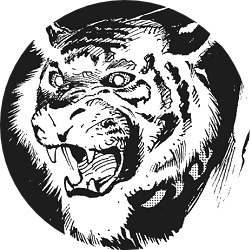
Set during an unspecified period in feudal Japan, the 60-page oneshot follows a samurai lord and several of his troops, who find themselves pursued by former allies following a rebellion. As they flee across a mountainous region under the cloak of darkness, they discover another pursuer in the form of a legendary specter known as the Waira, which is derived from an enigmatic and beastly spirit in Japanese folklore.
The oneshot is brilliantly atmospheric, spanning one night in the broody dark of the Japanese woodland. Satoshi Kon illustrates with finesse, silhouetting his characters against trees and mountains as the distant torches of their pursuers grow ever closer. The Waira’s reveal is particularly well done, as the beast bursts from the bushes, lit center frame by the blast of a rifle. The introductory page, too, is an amazing spread. A samurai stands silent in the forest, staring darkness in the face as the tree trunks surrounding him fade into the night. It’s a perfect tone-setter, with Waira providing some of the best examples in the collection of the expertise in Kon’s artwork.
The oneshots in Dream Fossil are ordered by date of publication and as you read from oldest to newest, you can observe Kon ironing out some of the rougher aspects of his work. His early oneshots include some jarring transitions, with an abruptness that can catch the reader off guard, but by the time we get to Waira, the plot reads much smoother and with less an erratic flow. It is certainly a refined and exciting piece—part historical skirmish, part horror pursuit—with a hypnotic and eerie setting that is impressively realised. The only downside comes nearer the end, whereby the rebellion is concluded in such a way that it all seems a bit trifling. Thankfully this is not too difficult to overlook, with the preceding showdown offering some spectacular and dramatic set pieces, ensuring the oneshot endures largely through its strong mood and exciting imagery.
Satoshi Kon sadly passed away in 2010 at the age of 46. None of his manga had been published in English prior to his death, but now his entire bibliography is available, including even his unfinished series. It’s an absorbing body of work, with many aspects that would become recognisable in his anime projects, notably his spirited characters and playful humour even amidst tense scenarios. Notable in Dream Fossil for fans of Kon’s anime is his oneshot Joyful Bell, which seems to have inspired the gist of Tokyo Godfathers.
Click here to explore the rest of 52 Oneshots in 52 Weeks and find my numerical ratings on MyAnimeList!
 Morning, Roo