PART 20 of 52 ONESHOTS in 52 WEEKS
押見修造の『ワルツ』 “Waltz” by OSHIMI Shuzo
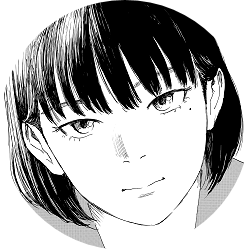
Shuzo Oshimi is known primarily for his manga The Flowers of Evil, but has a long career with many stand-out works. His series are often deeply psychological, and explore adolescence with themes of identity, perversion, and romance. Often, his main characters form an unlikely couple, with one obsessive individual thrusting another’s humdrum existence into a world of chaos. Many have lent themselves well to other media, having been adapted to television dramas, features films, and anime.
My first impression of Oshimi was a dubious one. I went from the dark and perverse Inside Mari, to the maddening melodrama of The Flowers of Evil, which was full of angsty and irritating characters that made it a chore to get through. But half way in, it swapped tact and re-contextualised all the hitherto adolescent strife as one might do their own childhood looking back, ending as a wonderfully astute coming-of-age tale. I quickly sought out another of the author’s long-running series; the high-school vampire odyssey Happiness. This work was his most straight-forward in terms of character and plot, but its ruminations on psychology and identity were nonetheless persuasive.
Certainly, Oshimi’s manga is not short on ‘content,’ for lack of a better word. His series are seeped in character study and steady drama that slowly builds to eruption. To see how the author would shape his recurrent and often sizable themes within a tighter format, I read one of his most recent oneshots. The story—titled Waltz—was published in a 2017 issue of the josei magazine Feel Young, and tells of the burgeoning relationship between high-school girl Onaga and her neighbour Kawashibara, a boy who enjoys cross-dressing.

One summer evening, Onaga spies Kawashibara wearing lingerie and make-up, looking out over his bedroom balcony with a beaming smile on his face. The two attend the same school and Onaga promptly asks Kawashibara about what he was doing the night before. Explaining that cross-dressing makes him feel happy, the two become friends, with Onaga donating clothes and helping Kawashibara with make-up. Kawashibara, a loner at school who is frequently bullied, finally has somebody to confide in, and Onaga, slowly ground down by a content but insignificant life with little notice from her parents, breaks away from her mundane routine.
The oneshot is a little over 50 pages in length and is quintessential Oshimi on surface; the artwork is beautifully sketched and the author’s signifiers are present, but it’s quite short on narrative, with much of the spectacle and complexity that usually makes his work so indelible sadly absent. Some oneshots conclude as a neat bundle that don’t require or want several chapters, but Waltz ends with a sense of longing. There’s a feeling here that the characters and story have more to give and it’s a shame that nothing really gets going.
Onaga has some inner monologue, but Kawashibara’s motivations and background remain uncharted. However, it is nice to see a more serious and matter-of-fact take on gender, given the oneshot format is often swamped with throwaway ecchi gender-swapping stories. Moreover, despite the lack of development for its cast, author Oshimi is nevertheless great at communicating feelings and emotion within the dialogue and artwork without being explicit. It’s one of the ways his characters often feel very genuine and equivocal, but then it’s all the more unfortunate that these characters aren’t afforded much study.
Though not all is lost — it would seem the themes in Waltz are ones the author is very keen to explore further. Three years later, he began publishing the series Welcome Back, Alice for Bessatsu Shounen Magazine. The manga is about three friends who are reunited in high-school, however, one of the male friends shows up to their reunion dressed as a girl. Shuzo Oshimi has stated the series is about deconstructing male sexuality, which you can certainly see inklings of in Waltz. There’s an interesting point about the feminine Kawashibara wanting to be accepted by his polar opposite, the macho school bully who likes to think himself a ladies man, but there’s just not enough within the oneshot for it to be anymore than a footnote. Waltz is an interesting snapshot, and it’s great it seems to have paved the way for something more substantial, but I wish it were double the length so the characters and themes could really flourish on their own.
Click here to explore the rest of 52 Oneshots in 52 Weeks and find my numerical ratings on MyAnimeList!
 Morning, Roo