PART 27 of 52 ONESHOTS in 52 WEEKS
大今良時の『聲の形』 “Koe no Katachi” by OIMA Yoshitoki
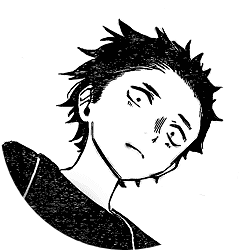
Koe no Katachi is a oneshot written and illustrated by Yoshitoki Oima, which was published in Kodansha’s Bessatsu Shounen Magazine in 2011. The title translates literally to The Shape of Voice, but it is known in English as A Silent Voice. Although the oneshot had won the 80th Weekly Shounen Magazine award for ‘Best Rookie Manga’ three years earlier in 2008, it wasn’t initially published in a magazine due to the ‘severity of the content,’ which involves the bullying of a deaf child.
When it was finally published following lengthy editorial discourse, as well as consultation with the Japanese Federation of the Deaf, who endorsed the oneshot, it garnered great reception and was picked up for serialisation. The manga series, also titled A Silent Voice, featured in Weekly Shounen Magazine from 2013 until 2014, spanning seven volumes. It was then adapted to film in 2016 by director Naoko Yamada and screenwriter Reiko Yoshida.
Shouko Nishimiya, who is deaf, transfers to a new middle school. She makes an effort to get to know her classmates, communicating with them via written messages in a notebook, but is scorned by the other children, who get fed up with her needs and exceptions. Spurred by Shouya Ishida, a brash and insensitive student, the class begin outright bullying Nishimiya, destroying her possessions and frequently mocking her. When the class must finally take responsibility for their actions, they absolve themselves and push all culpability onto Ishida, who is consequently targeted and bullied. Ishida then begins to consider how Nishimiya must have felt, and realises that nobody had truly made an effort to listen to her voice.

The oneshot’s themes are very hard-hitting, tackling the severity of bullying head-on. Depicting prejudices, persecution and grandstanding within the classroom setting, the oneshot develops a convincing portrayal of what is known as ijime — a form of bullying in Japanese schools that is particularly toxic, where targets are relentlessly ostracised and tormented often by large groups.
There’s a lot to unpack here, with author Oima (who created the oneshot when she was just eighteen) managing to incorporate significant matter and context into only 61-pages. Nishimiya is met with discrimination and ignorance, not only from her peers, who all follow one another in a form of mob mentality, but also authority figures. She remains fairly stoic throughout much of the oneshot, and although the story is not told from her point-of-view, the author does well to imply and suggest Nishimiya’s deeper desires, anxieties and circumstance without being too explicit.
The plot is instead guided by the brash Ishida, whereby it’s able to delve into redemption and the effects of bullying on the bully themselves. Admittedly, the oneshot isn’t able to fully explore motivations and the lasting ramifications of its themes and issues to the extent that the manga series does, but it is nonetheless an effective, moving and provocative piece that gets the very most out of its form.
The artwork is rendered well, with strong lines and a fine implementation of tone and texture effects for characters’ clothing and hair. The panel-to-panel storytelling is great, with engaging continuity. At a glance, the art possesses quite a characteristic shounen style, but is also distinctive to author Yoshitoki Oima, whose characters—particularly their facial features—are quite recognisable.
All three versions of A Silent Voice are worth looking into. The oneshot is, by its very form, the most succinct account, but comparatively the manga series is a little overwrought in parts. Unusually for me (as I am much more interested in manga), the anime is probably my preferred version. It cuts out some of the excess, with a finer balance between the light and dark moments.
Click here to explore the rest of 52 Oneshots in 52 Weeks and find my numerical ratings on MyAnimeList!
 Morning, Roo