PART 34 of 52 ONESHOTS in 52 WEEKS
伊藤潤二の『阿彌殻断層の怪』 “Amigara Dansō no Kai” by ITO Junji
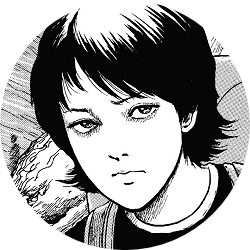
Junji Ito is one of the most renowned authors of horror manga, with a career spanning more than three decades. He has many stand-out works, including Uzumaki and Tomie, which have been adapted to film and anime. The author has also been successful in adapting existing material to manga, with a rendition of Osamu Dazai’s novel No Longer Human.
The bulk of Junji Ito’s catalogue is made up of oneshots which, early in his career, were featured often in the Asahi Sonorama magazine Monthly Halloween, with Ito quickly establishing himself as one of the publisher’s best new authors. Since then, Junji Ito’s short stories have appeared in magazines from all major manga publishers, with U.S. company Viz Media brining many of his horror anthologies to English-speaking regions.
This week I’ll be looking at Junji Ito’s eerie oneshot The Enigma of Amigara Fault, which was featured in a special edition of Big Comic Spirits magazine in 2000. Two years later, it was included as an extra in the second volume of Ito’s manga Gyo, where is can still be found today.

An unspecified Japanese prefecture is struck by an earthquake, opening up a fault on Amigara mountain. The freshly exposed rock reveals hundreds of human-sized holes, which sink deep into the mountainside. This strange phenomenon attracts visitors from far and wide, but hysteria takes hold when some claim to have found holes in their exact likeness. Unable to resist the urge, people are inexplicably drawn within.
The Enigma of Amigara Fault is an intensely psychological horror, in which the characters are unable to resist their mortal compulsions. This sensation is often referred to as the ‘call of the void,’ and is characterised by an intrusive desire to perform an act which may lead to death. The holes and the characters’ reactions to them have somewhat a Lovecraftian flavour, whereby the horror is in their uncanny and undetermined nature. Ito’s manga, which spans 32 pages, is very adroit — able to function both on surface level and with more elaborate sociological interpretations.
The characters, who are unable to rebuff the compulsion to venture into a hole made “just for them” could, for example, be viewed as a commentary on conformity and literally fitting into a role or function within society, sometimes to the detriment of ones broader desires. Sociology professor John Clammer discusses this mindset in his book Difference and Modernity, describing Japan as desiring a “higher level of social uniformity than most.” Alternatively, the holes, which can represent systems such as work or community, are pathways which might seem like the right fit on surface, but can often warp and change the further they progress, by which point the characters are literally in too deep and feel powerless to shift.
Junji Ito’s artwork is impressive, with a brilliant sense for perspective. The way the holes extend into the darkness is particularly striking, with light and shadow skilfully illustrated in a bold cross-hatched style. The sense of claustrophobia is exceedingly palpable when characters venture inside. The author’s character designs remind me often of the distinctive quality of illustrated B-movie posters, which are notable for their astonishing character expressions. All-in-all, The Engima of Amigara Fault is an indelible read and deftly exhibits Junji Ito’s aptitude for short-form horror. However, one memorable aspect of the author’s storytelling which isn’t so notable in this oneshot is his proclivity for dark comedy. Ito often weaves humour into his sinister and grotesque stories; one of my favourites is his oneshot She is a Slow Walker from the 8 Tales of the ZQN anthology, in which Ito pits Romero-styled slow zombies against the more nimble modern equivalents.
Click here to explore the rest of 52 Oneshots in 52 Weeks and find my numerical ratings on MyAnimeList!
 Morning, Roo
I really liked the idea of linking the story to the idea of Japanese society emphasising conformity over wellbeing/self preservation, it made me view it in a completely different perspective. Great post.
LikeLiked by 1 person