Sometimes I read a manga which I’d love to share a thing or two about, but just not enough to fill an entire article. My solution is this: Manga Musings — a consolidation of some of my recent reads into a more casually reflective write-up. Recently I’ve completed Haro Aso’s 18-volume survival thriller Alice in Borderland, alongside Inoryu and Ito’s many-faced mystery My Dearest Self with Malice Aforethought.

Alice in Borderland is celebrated as one of the staple ‘death game’ manga series. Its publication overlapped with similar stories, including Friend Game, Liar Game, and As the Gods Will, but Alice managed to stand out thanks to its mystifying setting, creative game designs, and a strong central theme in which the manga’s namesake Arisu strives to come to terms with the meaning of life and his place within the world. Yet my continual wonder throughout the manga was whether such an outlandish scenario (the manga is set in an alternate reality Tokyo, where hundreds of people have been inexplicably transported; they are forced to compete in survival games or face being eliminated by a laser beam from the sky) could have a conclusion which feels natural and satisfying.
Inventively, before revealing exactly what’s going on, the author guides the boundless setting to a crossroads, teasing numerous possible endings. Each one is fittingly eccentric, involving concepts such as aliens and virtual reality, but his chosen conclusion is even less predictable, despite being cleverly alluded to from the very first volume. Although premeditated, the finale does nonetheless render some of the plot’s components slightly puzzling, leaving a few lingering quibbles that are better settled through some abstract interpretations, but for the most part it works and ties into the theme of the manga very well.
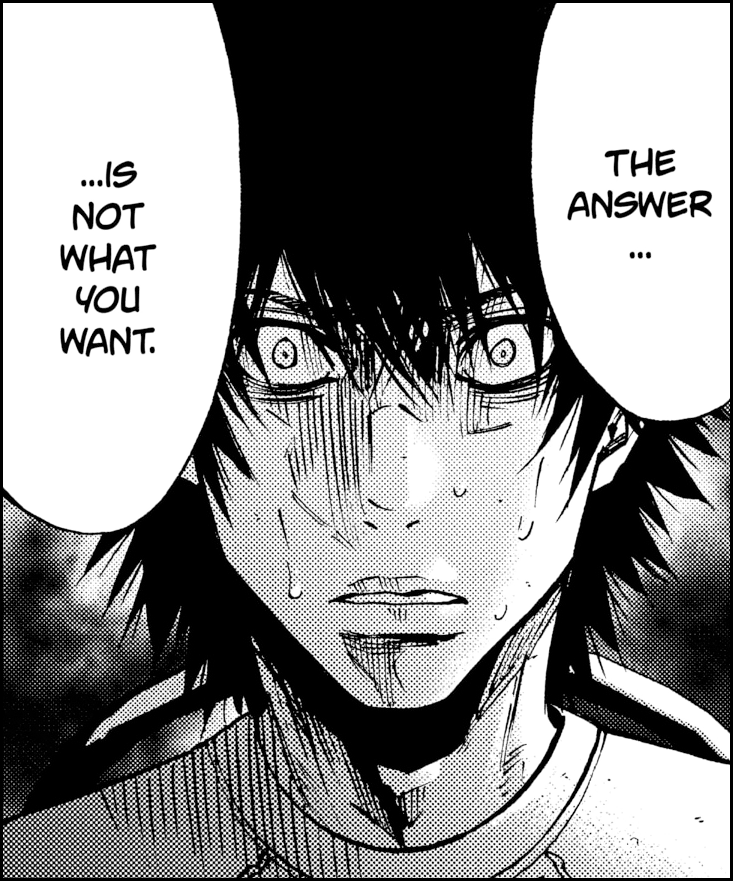
The manga is most enduring in its focus on raison d’être and life’s meaning, with author Haro Aso exploring the topic chiefly through the lens of Arisu, whose already jaded outlook on life is brought to the extreme in his own brushes with death and experiences with loss. The character is desperate for answers, wanting to know who or what exactly he should live for, but ultimately he finds an ironic hope in the great absence of clarity where—like the faux endings—anything is possible. Arisu is contrasted by a colourfully wicked cast of characters, several of whom are quite cruel, but for such a violent and oftentimes distressing story, it manages to culminate as agreeably life-affirming.
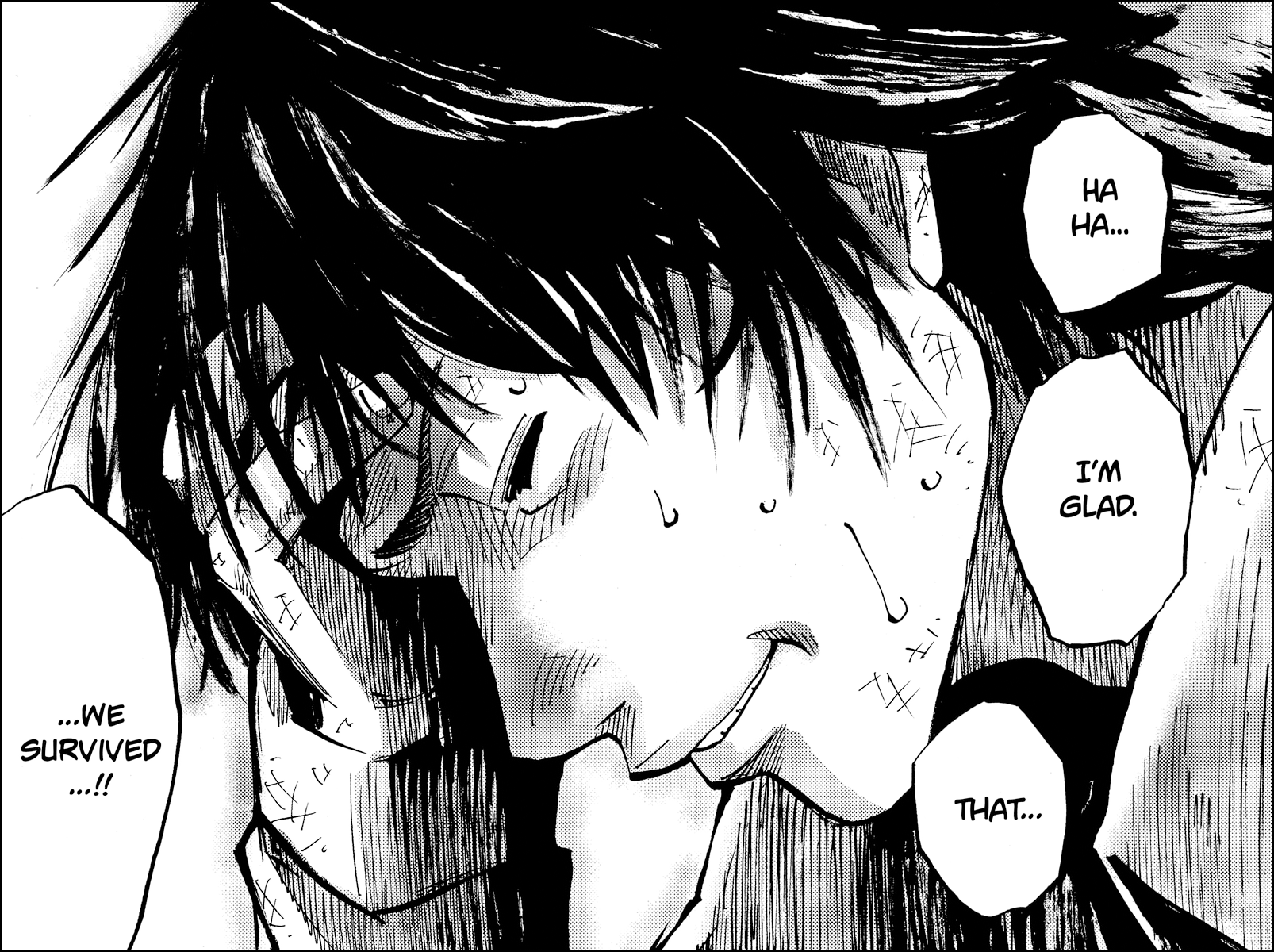
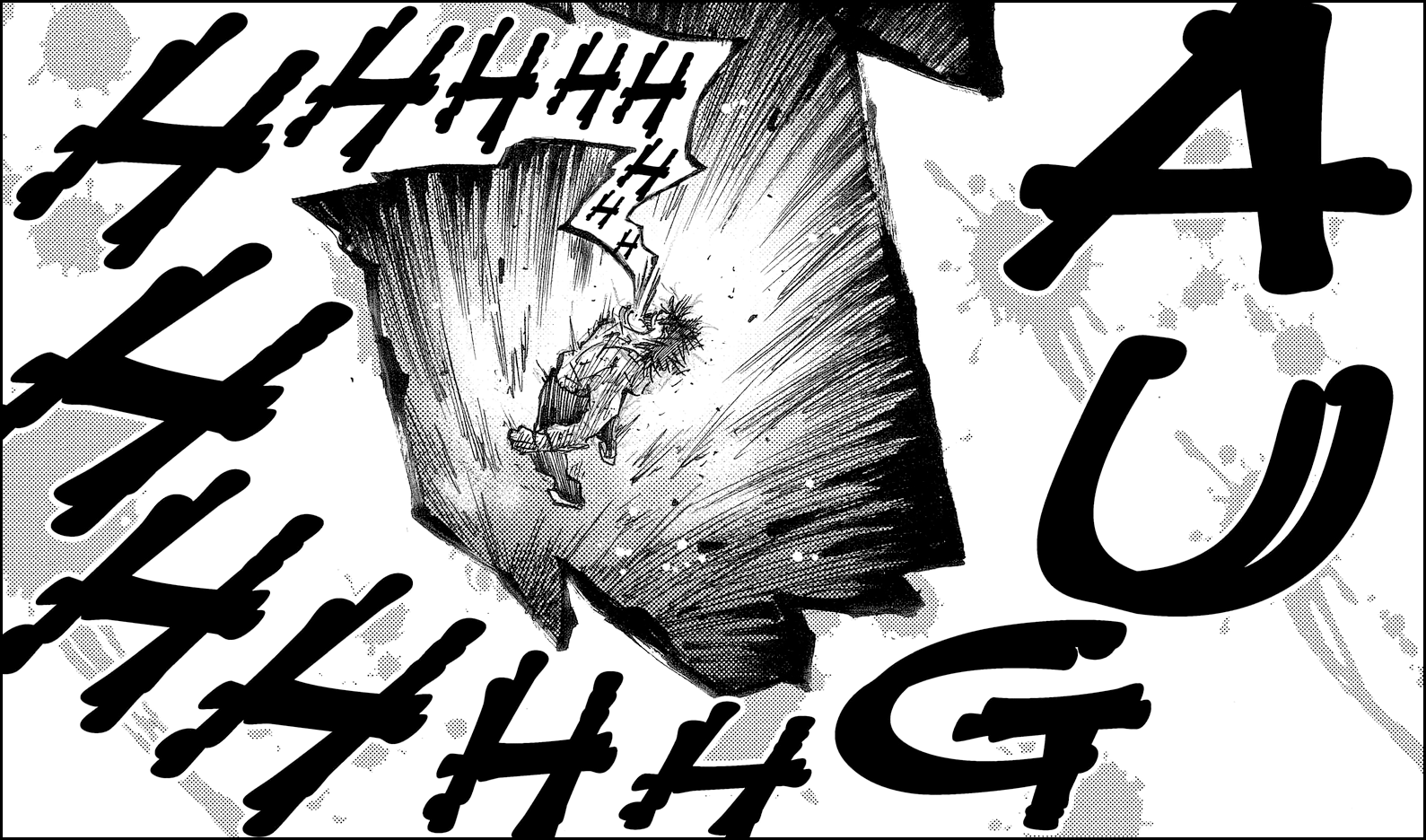
Lastly of note is the artwork, which has a rather gritty and realistic aspect. There is a storm sequence in the latter part of the manga wherein some of the environmental detail is difficult to distinguish, but otherwise the art is impressive, particularly in its character designs, use of expression, and dynamic action, where characters are often traversing elaborate sets. A favourite panel of mine is of Arisu crying out in despair. I love how dramatic it is as the speech bubble exits his mouth and spirals around; it has such energy and raw emotion that jumps straight from the page. Interestingly, author Aso decided to retire from drawing after the completion of Alice in Borderland, returning only to pen a short spin-off several years later. Now he works as a manga writer and is the author behind the popular comedy-horror series Zom 100, which recently reached its twentieth volume.
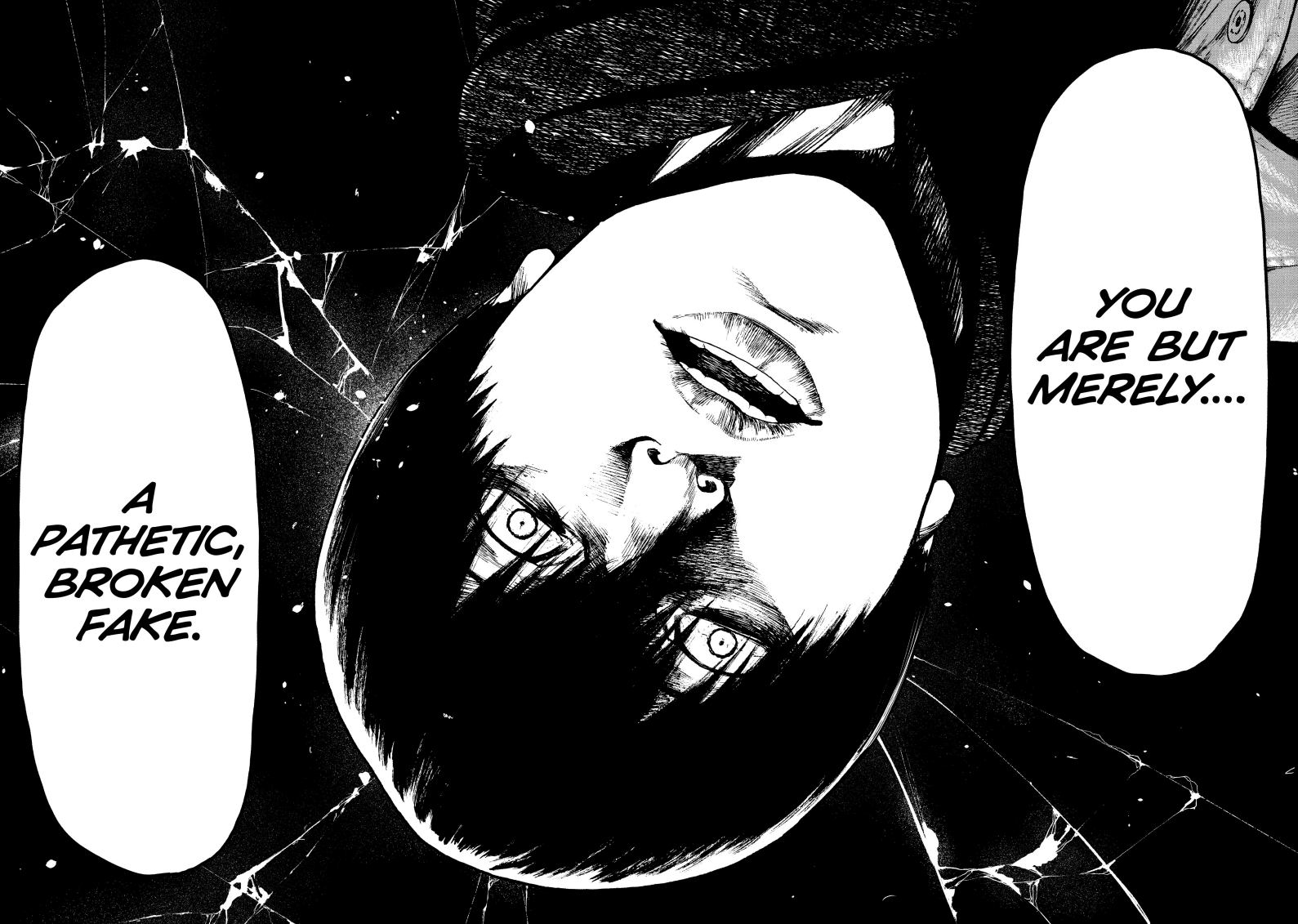
My Dearest Self with Malice Aforethought is equally resplendent in sublime art, again with an outstanding focus on expression. In the series, high school student Eiji Urashima discovers that he has dissociative identity disorder, with another ‘self’ waking up and taking control of his body as he sleeps. This new alter begins embroiling Eiji in a world of trouble, which all seems to lead back to his father, who committed suicide fifteen years ago after being outed as a notorious serial killer. The manga is rife with layered and duplicitous characters, whose many faces reveal themselves in the artwork, with artist Shota Ito skilfully tweaking the stance, countenance and manner of the characters to visualise multifarious personas.
The manga develops into a thoroughly entertaining and gritty mystery-thriller, which is fittingly illustrated with bold and feisty action, but in one of my favourite sequences, the artist illustrates a beautifully delicate depiction of the ‘self’ eroding away. In an abstract rendition, a character cracks and shatters like porcelain, losing their very appearance. As their broken body crumbles away, a single water droplet—the soul—falls from inside, initially splashing into absence, before ripples show the soul persisting as a reverberation. It’s such a gorgeous and moving representation of the moment, of which the manga has many. It’s further noteworthy for its framing, with brilliant implementation of inventive POV angles, and a memorable illustration of a character in prison, where the imposing granite-coloured wall in front of them takes up the entire page, but for a single speck of sky just about squeezed in at the top.
A large portion of the mystery in the manga surrounds the events of several consecutive days, with Eiji and classmate Rei sleuthing to piece together the events from multiple perspectives. It’s an absorbing and layered journey which manages to culminate well, though sometimes characters draw correct conclusions from rather frail pieces of information, with an almost super-human perception and shrewdness that allows them to unravel sinuous plots from the most gossamer thin threads. I suppose such things do happen, but combined with the foolhardy, all-or-nothing nature of several of the characters, certain developments do seem to work out with a reckless convenience.
Nonetheless, the series is seldom frustrating. I loved the duality of Eiji’s character, which is certainly one of the manga’s most engrossing aspects, but much of the cast feel well utilised and sufficiently charted. The manga doesn’t have a print publication in English, which is unfortunate given the high quality of the art, but Kodansha have released all eleven volumes digitally. Oddly, the translation is occasionally a tad crude, with spelling mistakes (associative identity disorder), repeated words (“They’ve already investigated this area already.”), nonsense Americanisms (“I could care less.”) and some odd phrasing. Not so much to take readers out of the story, but frequent enough that it is noticeable.
Viz’s release of Alice in Borderland has fewer mistakes, but I am very against their approach to sound effects, which is to (rather than provide a translation adjacent like Kodansha do) totally remove all of the Japanese onomatopoeia from the art, then redraw and replace them with English inflections. Sound effects are so often an intrinsic part of the art, implemented with a dynamic visual flair by the artists and assistants themselves; to edit the original artwork and replace a part of it is just not a pleasing practice to me, and rarely does the replication look as seamless or effective. Yet, all the same, it is great to have both manga available in English.
MANGA MUSINGS #1
 Morning, Roo
I loved the description of My Dearest Self with Malice Aforethought, I think its interesting how both works have small criticisms with a realism aspect- the amatuer sleuthing in the latter producing unlikely success and the conclusions of Alice in Borderland requiring some abstract interpretations. Great article, can’t wait to read more!
LikeLiked by 1 person
It’s difficult with mystery stories, where there are layers of twists and frequent revelations. I’ve read manga where you can certainly feel the author’s guiding hand. Sometimes events unfold in specific ways because of their direction, rather than it feeling necessarily authentic or earned within the story itself. There’s a smidge of that here, but I will say the main characters (Arisu and Eiji) feel wonderfully animated and alive.
LikeLiked by 1 person