PART 1 of 52 ONESHOTS in 52 WEEKS
藤本タツキの『さよなら絵梨』“Sayonara Eri” by FUJIMOTO Tatsuki
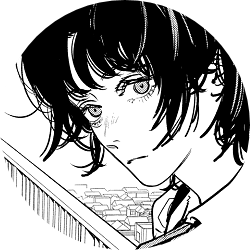
Published staunchly in Shueisha’s brand of Jump magazines, author Tatsuki Fujimoto’s first major work was the series Fire Punch, released between 2016 and 2018 whilst he was in his early 20s. Upon its conclusion, Fujimoto promptly debuted his next manga, the now famous Chainsaw Man. Yet before, during, and after this, the author has remained a dedicated creator of oneshots, penning well over ten distinct stories between 2011 and 2022.
Many of these have been collected in the two-part anthology Tatsuki Fujimoto Before Chainsaw Man, published in Japanese in 2021 and in English in 2023. Two others—titled Look Back and Goodbye, Eri—were released in their own dedicated volumes due to their length, spanning over 140 and 200 pages respectively. Most recently, Fujimoto collaborated with one of his former assistants, Oto Tooda, on a oneshot titled Just Listen to the Song.
For the very first entry of 52 Oneshots in 52 Weeks, I’m going to begin with one of Tatsuki Fujimoto’s longest and most popular oneshots, the aforementioned Goodbye, Eri, which has an ingenious and distinct style, informed largely by cinematic techniques. It was published digitally in both Japanese and English in April 2022, followed shortly thereafter by a Japanese print edition, with an English version released just a few months ago.

In the opening pages, twelve year old Yuta receives a smartphone for his birthday. His mother, who is terminally ill, urges Yuta to use it to film her and their every-day life, so he’ll always be able to look back and remember her. Yuta becomes a dedicated videographer, filming near everything as days turn into months. His mother soon passes away, and Yuta decides to edit his recorded memories into a film, which he premieres at his school. The film is met with disdain, with classmates decrying the ending—in which Yuta walks away from an exploding hospital—as insensitive. The hate becomes too much for Yuta, until he meets a self-confessed film fanatic named Eri, who wants to help him put together his next movie.
Goodbye, Eri is so packed full with ingenuity and clever ambiguity, that it’s difficult to know where to begin, but what is readily apparent from just the first few pages is its unique style. Fujimoto’s artwork is detailed and absorbing, with several inspired effects. The author creates an inventive double-exposure quality by duplicating layers of art, which is used to mimic a sort of handheld camera motion, which you can see in the image above. This is used exceedingly well to exhibit movement and action from a first-person perspective, as well as to suggest Yuta’s emotions in the way he holds and angles the camera.
Just as ingenious is the oneshot’s arrangement. Almost every page throughout its two-hundred page length consists of four rectangle panels, the shape of which evokes cinema’s widescreen aspect ratio. This conformity, used in conjunction with Fujimoto’s use of repetition, where he illustrates long scenes with little variation between panels, adds an acute sense of motion—of continuity—to his artwork. Sometimes the only thing that will change between panels is the turning of a head, hair blowing in the wind, or even just the blink of an eye. Fujimoto creates a unique type of pacing where each scene feels as though it unravels in one studious take.
This sort of filmic imitation would be rather inconsequential in most other contexts, but here it enforces key subtext and subjectivity where, as Yuta is filming all the time, it’s not always clear what is reality and what has been edited. Goodbye, Eri is an impressively layered portrayal of a struggling creator, that is astoundingly meticulous and rewarding in its implication. Exploring artistic expression and creator versus content, come the end, truth and art blend together to pave way for a film that may reveal more about its architect than its subject.
As a film enthusiast myself, to add my own convoluted Kermodian review, since Goodbye, Eri is so heavily inspired by cinema; it reminded me a lot of Millennium Actress and One Cut of the Dead in its artistic use of editing and form to merge fiction and reality, in addition to Me and Earl and the Dying Girl in its combined personal and filmic voyage, as well as The Fabelman’s in its love and survey of cinema, and in its equivocal portrayal of truth. I think it would make great accompanied reading particularly with the latter two. In terms of kindred manga, if you’re interested in reading something in a similar letterboxed style, Naoki Yamamoto’s oneshot Watching TV All the Time Makes You Stupid is a great pick, blending ingenuity and adult humour.
Click here to explore the rest of 52 Oneshots in 52 Weeks and find my numerical ratings on MyAnimeList!


Looking forward to more posts of the one-shots from that list… what a fun little project! Looks like I’ve read nearly none of them.
LikeLiked by 1 person
Thank you! Before I started, I had only read around 12 of them. But I compiled the list from a lot of different sources, so hopefully there’s good variety! I’ve read 31 now (I’m working ahead) and I’ve had a lot of fun. Can’t wait to share more!
LikeLiked by 1 person